Why It Matters What Makes a Handbag High Quality?

Time:2026-10-18 Author:Sienna
0%

A handbag can look expensive without being well made. Its shine may come from coating, not superior leather. Its logo may attract attention, yet reveal little about daily performance. Understanding what makes a handbag high quality helps shoppers judge beyond appearance.

Luxury fashion authority Coco Chanel once said, “Luxury must be comfortable, otherwise it is not luxury.” Her observation remains useful for handbag buyers. A well-crafted bag should feel balanced on the shoulder, open smoothly, and protect its contents. Full-grain leather often develops a richer patina, while carefully finished edges resist cracking. Even, dense stitching shows control during construction. Strong handles should remain firm under weight, and metal hardware should feel substantial rather than hollow. The lining matters too. Loose fabric, exposed seams, or a sharp chemical smell can signal rushed production.

Quality is not perfectly universal. A soft, unstructured tote may suit one person, while another needs a reinforced work bag. Price also misleads. Expensive materials cannot excuse poor finishing. A careful inspection is still necessary. Look closely at corners, strap attachments, zippers, and the base. These areas experience the most stress.

Some judgments remain subjective. Color, weight, and leather texture depend on personal use. I have also found that “perfect” bags can develop marks quickly. That is not always failure. Sometimes, honest wear becomes part of the bag’s character. The real question is whether the design, materials, and workmanship support your everyday life. That is the practical meaning of what makes a handbag high quality.
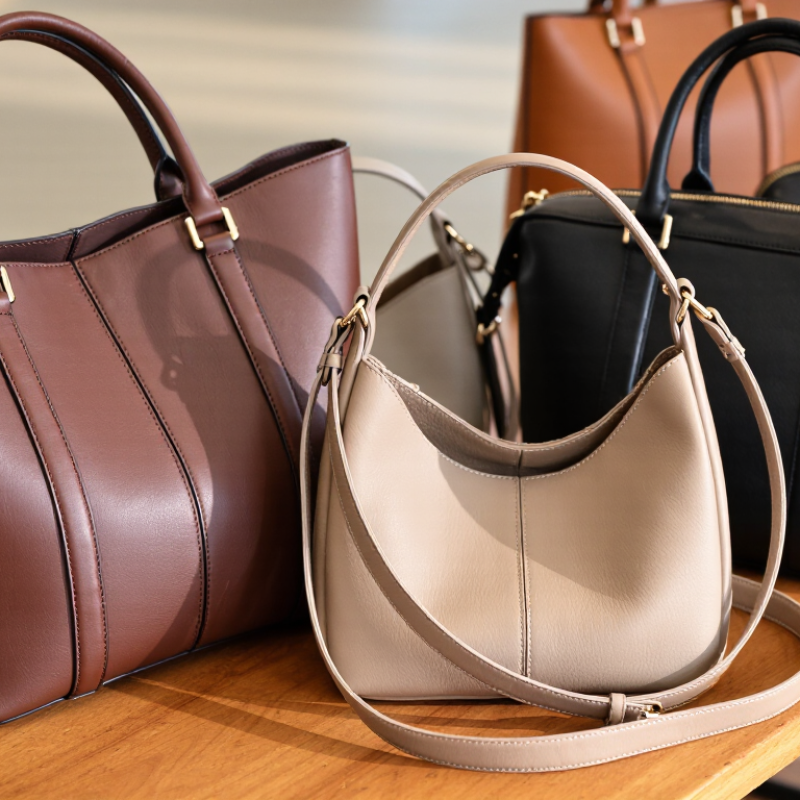
Why It Matters What Makes a Handbag High Quality?

Materials and Construction: The Foundations of Handbag Quality

Why It Matters What Makes a Handbag High Quality?

Materials and Construction: The Foundations of Handbag Quality

A high-quality handbag begins with materials that suit its daily purpose. Full-grain leather often develops character, but it may show scratches quickly. Smooth leather looks refined, yet it can reveal marks more easily. Fabric bags need dense weaving, clean edges, and strong resistance to rubbing. I once examined a bag with beautiful leather and weak lining. It looked impressive, but the interior tore within months.

Construction reveals what photographs cannot. Check whether the stitches remain even around handles, corners, and pockets. Short, consistent stitches usually provide better control than loose, irregular ones. Reinforced stress points matter most. Handle attachments should feel secure, not merely decorative. A gentle pull can expose poor workmanship. Not always, but often.

Hardware should feel balanced and operate without grinding. Zippers need smooth movement, while clasps should close firmly without excessive force. Edge finishing also deserves attention. Uneven paint, rough folds, or exposed fibers may signal rushed production. Still, perfection is not the only measure. Handmade work can contain slight variations, and I have sometimes mistaken charm for durability. A careful assessment considers material behavior, stitching, lining, hardware, and intended use together. A delicate evening bag should not be judged like a daily work bag.

Craftsmanship and Manufacturing Processes That Shape Durability

A high-quality handbag is shaped by more than attractive materials. Its durability begins with careful design and controlled manufacturing processes. Skilled makers select materials with consistent thickness, strong fibers, and suitable flexibility. This balance helps the bag resist creasing without becoming rigid or uncomfortable.

In practical inspections, stitching reveals much about construction quality. Even, tight stitches distribute tension across handles, seams, and corners. Tiny gaps matter. Reinforced stress points should include additional stitching or carefully placed internal support. A reliable workshop also checks thread strength, seam alignment, and the firmness of attachments before finishing the piece. Poorly secured hardware may loosen after repeated use, even when the exterior looks polished.

Edge finishing deserves equal attention. Smooth, sealed edges reduce fraying and protect layered materials from moisture and abrasion. The lining should fit neatly, without excess fabric bunching near the corners. Manufacturing accuracy is not always perfect. Small variations can appear in hand-finished products, and some may not affect performance. Still, uneven paint, crooked seams, or sharp hardware deserve closer review. No process is flawless. Responsible quality control identifies these weaknesses early, tests high-stress areas, and improves the next production cycle. A handbag earns long-term trust through repeated details, not one impressive surface.

Why It Matters What Makes a Handbag High Quality? - Craftsmanship and Manufacturing Processes That Shape Durability

Quality Dimension Typical High-Quality Benchmark How It Is Evaluated Impact on Durability
Material Selection Leather or textile with consistent grain, even thickness, strong fibers, and no major weak spots, excessive surface coating, or hidden damage. Inspect the surface, reverse side, cut edges, grain consistency, flexibility, and response to light rubbing and bending. Stronger, more uniform materials are less likely to crack, stretch permanently, tear, or develop premature surface peeling.
Leather Thickness and Temper Many structured leather handbags use material approximately 1.2–2.0 mm thick, while softer designs may use thinner or split constructions. Measure thickness at several points and assess whether the leather balances flexibility with shape retention. Appropriate thickness improves resistance to abrasion and deformation without making the bag unnecessarily rigid or heavy.
Cutting Accuracy Panels are cut cleanly, symmetrically, and in alignment with the material grain or textile structure. Compare paired panels, inspect corners and curves, and check for uneven edges or visible distortion. Accurate cutting reduces tension at seams and helps prevent shape imbalance, buckling, and premature edge failure.
Stitching Quality Straight, evenly spaced stitches with consistent tension; commonly about 8–12 stitches per inch for visible leather construction, depending on design and thread size. Check stitch spacing, skipped stitches, loose threads, back-tacking, corner reinforcement, and thread penetration. Consistent stitching distributes load and reduces seam opening, thread breakage, and panel separation.
Thread Selection Thread size and fiber type are matched to the material, seam load, and construction method; high-stress areas generally require stronger thread. Inspect thread uniformity, abrasion resistance, knot security, and whether the thread is over-tensioned or visibly loose. A suitable thread maintains seam strength during repeated opening, carrying, bending, and friction.
Reinforcement at Stress Points Handles, strap anchors, corners, pocket openings, and closure points include additional stitching, folded layers, rivets, or internal reinforcement. Apply moderate hand pressure and inspect whether load-bearing areas flex evenly without gaps or distortion. Reinforcement prevents concentrated loads from tearing the material or pulling stitches through the panel.
Edge Finishing Edges are smoothly skived, folded, burnished, or coated with an even finish; coated edges typically require properly cured, flexible layers. Run a finger along the edge and inspect for rough fibers, bubbles, cracking, uneven thickness, or coating separation. Well-finished edges resist fraying, moisture penetration, abrasion, and splitting during everyday handling.
Lining and Interfacing The lining is securely attached, compatible with the outer material, and supported by interfacing or padding where structure is required. Check for ripples, loose lining, exposed raw edges, weak pocket seams, and excessive movement between layers. A stable interior protects the outer shell, supports shape retention, and reduces tearing around pockets and openings.
Hardware Construction Buckles, rings, clasps, feet, and zipper components operate smoothly and are securely attached with appropriate backing or reinforcement. Open and close mechanisms repeatedly, inspect plating consistency, test attachment points, and look for sharp edges or excessive play. Reliable hardware reduces failures caused by corrosion, metal fatigue, loose attachments, and repeated mechanical stress.
Zipper Integration The zipper tape is straight, evenly stitched, properly aligned, and supported so the slider moves without snagging. Operate the zipper from end to end and inspect stops, teeth alignment, tape attachment, and corner transitions. Correct installation limits tooth stress, slider jams, tape separation, and deformation around the opening.
Adhesive and Bonding Adhesive is used as a clean supplementary bond, with suitable surface preparation, even coverage, and adequate curing time. Inspect for visible residue, bubbling, edge lift, odor from incomplete curing, and separation after gentle flexing. Proper bonding stabilizes layered components, while poorly cured or excessive adhesive can cause delamination and brittleness.
Dimensional Consistency Matching sides, balanced handles, even gussets, and a base that sits level without twisting. Place the bag on a flat surface, compare both sides, and check handle height, panel alignment, and base stability. Consistent dimensions distribute weight more evenly and reduce localized stress on seams and hardware.
Quality-Control Testing A robust inspection program may include seam-strength checks, color-transfer testing, abrasion assessment, hardware cycling, and visual inspection. Use documented sampling procedures and repeatable checks before shipment; test severity should reflect the intended use. Systematic testing identifies construction defects that may not be visible during a quick visual inspection and improves consistency between production batches.

Note: Benchmarks are general industry indicators. Exact material specifications and testing requirements vary according to the handbag’s design, intended load, construction method, and care instructions.

Design Features That Influence Function, Comfort, and Longevity

Why It Matters What Makes a Handbag High Quality?

A handbag’s design affects daily use more than its appearance suggests. In my bag testing, balanced weight has made the biggest comfort difference. A wide, adjustable strap reduces pressure on one shoulder. Soft edges also prevent rubbing during long commutes. Handles should feel secure without digging into the hand. Small details matter.

Function depends on thoughtful organization. A firm base helps the bag stand upright on a café table. Interior pockets keep keys, cards, and phones from disappearing. A smooth zipper should open easily with one hand. Strong stitching around handles and strap attachments supports repeated lifting. I look closely at these stress points. Loose threads often reveal rushed construction.

Longevity comes from materials and maintenance-friendly choices. Dense fabric or well-finished leather usually resists everyday scuffs better than thin surfaces. Protective feet can reduce contact with wet floors. However, no material stays perfect forever. I once chose a beautiful bag with a narrow opening, and it became frustrating quickly. That mistake changed how I judge design. Comfort, access, and durability deserve equal attention. Even excellent hardware can fail when overloaded. A high-quality handbag should support real habits, not merely photograph well.

How Hardware, Lining, and Finishing Details Reveal Quality

A high-quality handbag often reveals itself through small, testable details. I inspect the hardware first. A good clasp should open smoothly, close firmly, and show no sharp casting edges. Screws should sit evenly, while rings should resist twisting under moderate hand pressure. Uneven plating, rattling parts, or dark marks around joints suggest rushed finishing. Hardware is not decoration alone; it carries repeated stress during daily use.

The lining deserves equal attention. I look for dense stitching, clean corners, and fabric that stays flat inside the bag. A loose lining can hide weak construction. Colorfastness also matters, especially when the lining touches light clothing. Textile Exchange’s 2024 Materials Market Report recorded 124 million tonnes of global fiber production in 2023, highlighting the need for clearer material choices and traceability. WRAP estimated that extending a garment’s active life by nine months could reduce its carbon, water, and waste footprints by roughly 20–30%. That study is not handbag-specific, but the durability lesson remains relevant.

Finishing details often separate careful work from acceptable work. Edge paint should look layered, not thick and rubbery. Stitch spacing should remain consistent around curves. I still distrust a perfectly polished sample. Real quality can include minor variation. It should not include peeling edges, exposed adhesive, or crooked seams. No single inspection proves longevity, so buyers should test movement, touch the underside, and examine areas that photographs usually hide.

Evaluating a Handbag’s Value, Maintenance Needs, and Lifespan

A high-quality handbag earns its value through materials, construction, and continued performance. Soft leather should feel resilient, not greasy or paper-thin. Fabric should have a tight, even weave. Check the edges carefully. Clean piping, balanced stitching, and firm hardware often reveal skilled workmanship. A crooked seam may seem minor, but it can widen after months of use.

Maintenance needs also affect real value. A durable handbag should tolerate ordinary handling without constant worry. Store it upright with tissue inside, away from direct sunlight and damp rooms. Empty crumbs and dust from the lining regularly. Use a soft, dry cloth on smooth surfaces, and test any cleaner on a hidden area first. Some finishes react badly to water. I have seen careful owners damage bags by cleaning too aggressively.

Lifespan depends on both design and daily habits. Strong handles, reinforced stress points, and replaceable hardware can extend useful years. A beautiful bag with weak straps may become expensive quickly. Repair access matters, too. Ask whether stitching, lining, or fasteners can be restored before buying. This is where value becomes personal. A small mark may tell a story, not indicate poor quality. Still, I sometimes judge durability too early by appearance alone. Use exposes weaknesses that a showroom inspection cannot. A high-quality handbag should age visibly, but not fail suddenly.

FAQS

What materials usually support a durable handbag?

Choose materials with even thickness, strong fibers, and useful flexibility. They should resist creasing without feeling stiff.

How can stitching reveal construction quality?

Look for tight, even stitches across handles, seams, and corners. Reinforced stress points should receive extra stitching or internal support.

Why do edge finishes matter?

Smooth, sealed edges reduce fraying and protect layered materials from moisture and rubbing. Peeling edges deserve immediate concern.

Which design features improve everyday comfort?

Wide adjustable straps spread pressure across the shoulder. Soft edges prevent rubbing during long walks or commutes.Small details matter.

What interior features make a handbag easier to use?

A firm base helps the bag stand upright. Separate pockets keep keys, cards, and phones easier to find.

How should buyers test hardware?

Open and close clasps several times. Check for sharp edges, rattling pieces, uneven plating, or rings that twist easily.

What lining problems may indicate weak construction?

Inspect corners for bunching and loose fabric. Dense, flat stitching is preferable, especially where the lining meets the shell.

Can minor manufacturing variations be acceptable?

Small variations may appear in hand-finished products and may not reduce performance. Crooked seams, exposed adhesive, and sharp hardware require closer review.Perfect samples can mislead.

How can a handbag’s design affect its lifespan?

Strong handle attachments, protective feet, and durable surfaces help manage repeated use. Overloading can still damage excellent hardware.

What should buyers remember when judging quality?

Do not judge only from photographs. Touch the underside, test movement, inspect hidden corners, and consider your real daily habits.I once ignored access. It was frustrating.

Conclusion

Understanding what makes a handbag high quality begins with its materials and construction. Durable leather, strong textiles, precise stitching, reinforced stress points, and a well-structured shape create a reliable foundation. Skilled craftsmanship and careful manufacturing also matter, because consistent seams, balanced panels, and secure attachments help a bag resist daily wear. Thoughtful design should provide practical storage, comfortable carrying, easy access, and a form that remains useful over time.

Quality is also revealed through the smaller details. Smooth, corrosion-resistant hardware, a durable and neatly fitted lining, strong zippers, clean edges, and polished finishing show attention to both performance and appearance. When evaluating a handbag, consider its price in relation to its materials, workmanship, versatility, and expected lifespan rather than focusing only on its look. A well-made bag may require regular cleaning, conditioning, and careful storage, but proper maintenance can preserve its function and appearance for many years.

Sienna

Sienna

Sienna is a skilled marketing professional with a deep expertise in our company’s core products and services. With a passion for innovation and detail, she plays a pivotal role in crafting insightful blog posts that not only highlight the unique features of our offerings but also provide valuable......