How to Choose a Long Term Handbag Manufacturing Partner?

Time:2026-10-03 Author:Madeline
0%

Choosing a handbag factory for one season is manageable. Building a dependable partnership requires a different standard. The right partner protects quality, timelines, margins, and brand trust. This guide explains how to choose a long term handbag manufacturing partner through practical evaluation, not attractive photographs alone. A polished showroom can hide weak production control. Real confidence comes from evidence.

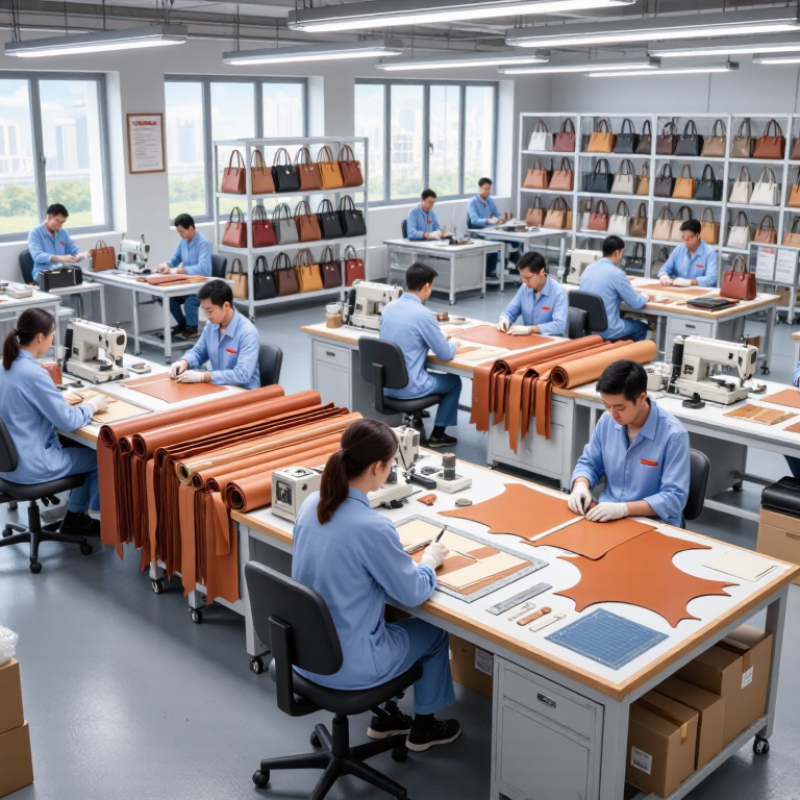
In my experience, factory visits reveal details that emails miss. Examine cutting tables, stitching lines, edge-painting stations, and packing areas. Ask who checks dimensions, hardware, lining, and color consistency. Request production samples and compare them with approved specifications. Review capacity, minimum order quantities, material sourcing, lead times, and corrective-action records. A reliable manufacturer should explain problems clearly, including what failed and how it was fixed. Certifications may support credibility, but they should be current, verifiable, and relevant to the intended market. Do not accept vague promises.

Long-term fit also depends on communication and commercial discipline. Confirm ownership of patterns, confidentiality expectations, payment terms, inspection procedures, and change approval steps. Test the relationship with a small, clearly documented order. Watch how the team handles delays, questions, and an imperfect sample. No factory is flawless. I have learned that honest reporting often matters more than a perfect first meeting. The strongest partnership grows through measurable standards, respectful feedback, and consistent delivery over time.
How to Choose a Long Term Handbag Manufacturing Partner?

Define Your Handbag Manufacturing Requirements

How to Choose a Long Term Handbag Manufacturing Partner?

Define Your Handbag Manufacturing Requirements

A reliable partnership begins with a precise product brief. Define the handbag’s dimensions, structure, intended use, and target customer. Specify materials, lining, hardware, thread color, and edge finishing. Include reference photos, sketches, and measurements. Small details prevent expensive sampling errors.

Describe the required performance. A daily handbag may need reinforced handles, smooth zippers, and tested colorfastness. State your expected order quantity, packaging method, delivery window, and quality standards. Also clarify acceptable tolerances for stitching, alignment, and material variation. These details help a factory estimate capacity and production risk accurately.

Tips: Request a sample before approving bulk production. Check pocket depth, strap comfort, hardware movement, and weight. Ask how inspections are recorded. A clear inspection process is more dependable than verbal promises. Confirm material documentation and applicable product-safety requirements for your selling markets. During development, keep one approved sample as the physical reference.

A requirement sheet is never perfect. I have learned that practical testing often reveals missing details. For example, a handle can look strong but feel uncomfortable after ten minutes. Revise the specification after sampling. Good manufacturers should discuss these weaknesses openly, not hide them. Clear drawings, written approvals, and regular production updates create a stronger working foundation.

Assess a Partner’s Production Capabilities and Experience

When choosing a long-term handbag manufacturing partner, examine production capabilities beyond photographs and factory promises. Ask how many cutting tables, sewing lines, and skilled technicians support your expected order volume. A capable facility should explain its process clearly, from pattern development to final packing.

Request physical samples, not only digital images. Check edge painting, stitch spacing, lining alignment, zipper movement, and handle strength. Small details reveal process discipline. Ask whether the factory can manage different materials, including smooth leather, canvas, recycled fabrics, and delicate hardware. Confirm its testing methods for colorfastness, abrasion, load resistance, and repeated opening. Production records matter too. Review defect rates, rework procedures, and delivery performance from comparable projects.

Experience should match your product, not simply the factory’s age. A manufacturer with fifteen years of general experience may struggle with structured handbags or complex small-batch orders. Ask for anonymized examples, monthly capacity, staff training records, and backup plans for material delays. Visit the production floor when possible. A clean sample room is useful, but the sewing line tells more. Look for organized workstations, traceable inspections, and workers who understand quality standards. No factory is perfect. One missed detail can expose a weak control system. Leave room for improvement, and judge how honestly the partner discusses past mistakes.

How to Choose a Long Term Handbag Manufacturing Partner? - Assess a Partner’s Production Capabilities and Experience

A practical, evidence-based screening framework for evaluating production capability, reliability, quality control, and long-term manufacturing experience.

Assessment Dimension Key Metric Recommended Screening Benchmark Evidence to Request and Verify Weight Evaluation Result
Manufacturing Experience Years of continuous handbag production At least 5 years of relevant production experience Factory registration records, production history, representative product archives, and references from comparable projects 10% Pass / Review / Fail
Production Capacity Verified monthly output for comparable handbag styles Capacity should exceed the forecasted monthly order volume by approximately 20% Recent production plans, anonymized delivery records, line-balancing data, and capacity calculations by product category 15% Pass / Review / Fail
Production Flexibility Number of active production lines and product construction capabilities At least 2 production lines or a documented backup arrangement Production-line photographs, equipment lists, staffing plans, and evidence of experience with structured, soft, and multi-component bags 10% Pass / Review / Fail
Material Capability Ability to process leather, coated materials, textiles, linings, hardware, and trims Documented capability for all materials specified in the product brief Material approval procedures, supplier qualification records, cutting and sewing equipment lists, and material-specific production samples 10% Pass / Review / Fail
Sampling Performance Sample development lead time and revision control Initial prototype generally completed within 7–15 working days after receiving complete specifications Sample-development workflow, historical sample timelines, technical-pack review process, and records of sample revisions 10% Pass / Review / Fail
Bulk Production Lead Time Time from approved pre-production sample to shipment readiness A clearly defined, repeatable lead time with documented contingency planning Production calendars, purchase-order milestones, capacity reservation policy, and records of on-time delivery performance 10% Pass / Review / Fail
Quality Management Inspection stages and defect-control system Incoming, in-process, and final inspections with documented acceptance criteria Quality manual, inspection checklists, defect classification, corrective-action reports, and final inspection records 15% Pass / Review / Fail
Product Testing Testing of colorfastness, seam strength, abrasion, hardware, and load performance Testing requirements defined according to the product’s materials, construction, and market destination Third-party or in-house test reports; methods may include recognized ISO or ASTM procedures where applicable 8% Pass / Review / Fail
Traceability Ability to trace materials and production batches Batch-level records for primary materials, hardware, operators, inspections, and shipment lots Material receiving logs, lot codes, production tickets, warehouse records, and shipment documentation 5% Pass / Review / Fail
Compliance and Social Responsibility Labor, workplace safety, environmental, and legal compliance Current social-compliance assessment or audit, with corrective actions closed or actively managed Audit reports, business licenses, health and safety records, environmental permits where applicable, and corrective-action plans 5% Pass / Review / Fail
Business Continuity Backup suppliers, emergency capacity, and risk-management procedures Documented response plan for material shortages, equipment failure, labor disruption, and logistics delays Business-continuity plan, approved backup suppliers, maintenance schedules, insurance information, and escalation contacts 2% Pass / Review / Fail

Verify Quality Control, Compliance, and Ethical Standards

Choosing a long-term handbag manufacturing partner starts with evidence, not polished samples. Ask how quality is controlled daily. A reliable factory should show written inspection procedures, trained inspectors, and measurable acceptance standards. Check material thickness, stitching density, edge paint, hardware strength, and color consistency. Request recent batch records, not only showcase pieces. Small details matter. During a factory visit, watch operators inspect seams under bright light. Ask who approves a rejected panel and how defects are recorded. This reveals whether quality control is routine or performative.

Compliance needs equal attention. Review permits, workplace policies, wage records, working-hour controls, and health and safety training. Verify that subcontracting is disclosed and monitored. Material documentation should support origin claims and restricted-substance testing. Independent audits can help, but an audit is not permanent proof. Conditions may change after the auditor leaves. Ask for corrective-action reports, deadlines, and evidence of closure. A partner that admits gaps may be more trustworthy than one claiming perfection. Still, promises require verification.

Ethical standards should appear in operations, not brochures. Look for grievance channels workers can use safely, clear anti-harassment rules, and emergency procedures. Review whether overtime is voluntary and properly recorded. Environmental controls also deserve practical questions. How is wastewater handled? How are cutting scraps stored or reused? Keep a shared scorecard and review it quarterly. Include quality trends, audit findings, worker concerns, and delivery records. No system is flawless. Strong samples can hide weak production discipline. Long-term trust grows through repeated checks, transparent corrections, and careful decisions when evidence is incomplete.

Compare Costs, Communication, and Supply Chain Reliability

Choosing a long-term handbag manufacturing partner requires more than comparing unit prices. Calculate the landed cost: materials, hardware, sampling, inspection, freight, duties, payment terms, and expected rework. A factory quoting 8% less may become more expensive after defects and delayed deliveries. I have seen small stitching errors create large replacement costs. Ask for a cost sheet with leather yield, minimum order quantities, tooling fees, and price-adjustment rules. Leave room for doubt.

Communication deserves its own scorecard. Measure quotation speed, sample accuracy, technical questions, and escalation quality. Require one accountable project manager and written approvals for color, edge paint, lining, and hardware finishes. A weekly production report should show order status, material arrivals, inspection results, and open risks. Short messages are useful. Vague promises are not. The 2024 McKinsey State of Fashion report continues to identify supply-chain disruption and geopolitical uncertainty as major industry pressures, making transparent communication commercially important.

Supply-chain reliability should be tested before a large commitment. Review supplier audits, material traceability, backup sources, capacity records, and on-time-in-full performance. Request evidence, not assurances. The World Bank’s 2023 Logistics Performance Index evaluates 139 economies across tracking, timeliness, infrastructure, and logistics competence. These factors directly affect delivery planning. UNCTAD reports that over 80% of world merchandise trade by volume moves by sea, so port congestion and freight volatility deserve scenario planning. Keep a realistic buffer. Perfect reliability is unlikely. A partner that reports problems early is often safer than one that always reports “on schedule.”

Establish a Trial Order and Long-Term Partnership Framework

Choosing a long-term handbag manufacturing partner should begin with a controlled trial order. A small order reveals more than a polished factory presentation. Request samples made from the intended materials, hardware, lining, and thread. Check edge paint, zipper movement, stitching density, odor, and logo placement. Measure every sample against the approved specification sheet.

Set clear trial-order conditions before production starts. Confirm minimum quantities, sample approval steps, lead times, packaging details, and payment milestones. Define acceptable tolerances for size, color, stitching, and hardware alignment. Ask for a written inspection report with dated photos. A reliable manufacturer should explain problems early, not hide them behind optimistic promises.

The trial should also test communication. Send one revised specification and observe how accurately the team responds. Keep records of questions, changes, approvals, and delivery dates. In my experience, small misunderstandings often become expensive during bulk production. One weakness may appear late. That deserves honest review. If quality passes but communication remains slow, the partnership still needs caution. If a defect appears, discuss its cause and corrective action instead of demanding a quick replacement. A long-term framework can include quarterly quality reviews, capacity updates, material testing, and a shared improvement log. Trust grows through repeated evidence, not friendly conversations alone.

FAQS

What information should a handbag manufacturer receive before development?

Provide dimensions, structure, intended use, and target customer details. Include material, lining, hardware, thread color, and edge-finishing requirements. Add sketches, measurements, and reference photos. Small details matter. A missing measurement can cause costly sampling errors.

Which performance details should be included in the product brief?

Describe handle strength, zipper smoothness, colorfastness, and expected daily use. State order quantity, packaging method, delivery window, and quality standards. Define acceptable stitching, alignment, and material variations. Practical use may reveal missing requirements.

Why should a physical sample be approved before bulk production?

A sample reveals problems that drawings may miss. Check pocket depth, strap comfort, hardware movement, weight, and odor. Measure every part against the approved specification sheet. Keep one approved sample as the physical reference.

How can a buyer assess a manufacturer’s production capability?

Ask about cutting tables, sewing lines, technicians, and monthly capacity. Request physical samples made with the intended materials. Review edge painting, stitch spacing, lining alignment, and zipper movement. The sewing line often reveals more than factory photographs.

What production records should a potential partner provide?

Request defect rates, rework procedures, delivery performance, and inspection records. Ask for anonymized examples from similar handbag projects. Review staff training and backup plans for material delays. No factory is perfect. Honest explanations matter more than polished promises.

What should a controlled trial order include?

Confirm minimum quantities, sample approvals, lead times, packaging, and payment milestones. Use the intended material, hardware, lining, and thread. Define tolerances for size, color, stitching, and hardware alignment. Request dated inspection photos and a written report.

How can a trial order test communication quality?

Send one revised specification and compare the response with your instructions. Record questions, changes, approvals, and delivery dates. Small misunderstandings can become expensive during bulk production. Slow communication deserves caution, even when product quality passes.

How can a long-term manufacturing partnership improve over time?

Schedule regular quality reviews, capacity updates, and material testing. Maintain a shared improvement log with causes and corrective actions. Discuss defects openly instead of requesting quick replacements. Trust needs evidence. The framework may still need revision.

Conclusion

Choosing the right manufacturing partner is essential for building a stable and successful handbag business. This guide explains how to choose a long term handbag manufacturing partner by first defining your product requirements, including materials, design complexity, production volume, quality expectations, and delivery timelines. A suitable partner should have proven experience, flexible production capabilities, skilled workers, and the equipment needed to consistently produce your handbag designs.

The article also highlights the importance of reviewing quality control systems, responsible production practices, workplace standards, and compliance procedures. Businesses should compare pricing transparently while considering communication, responsiveness, sourcing capacity, and supply chain reliability rather than focusing only on the lowest quote. Before making a long-term commitment, placing a trial order can help evaluate workmanship, packaging, lead times, and cooperation. Clear agreements regarding quality standards, payment terms, revisions, delivery schedules, and ongoing communication can then establish a dependable framework for long-term collaboration.

Madeline

Madeline

Madeline is a dedicated marketing professional with a wealth of expertise in our company's core offerings. With a keen understanding of the industry, she brings a unique perspective to her role, consistently delivering high-quality content that highlights the superior aspects of our products. As......