What Makes a 2026 Handbag Collection Attract Global Buyers?

Time:2026-10-08 Author:Sienna
0%

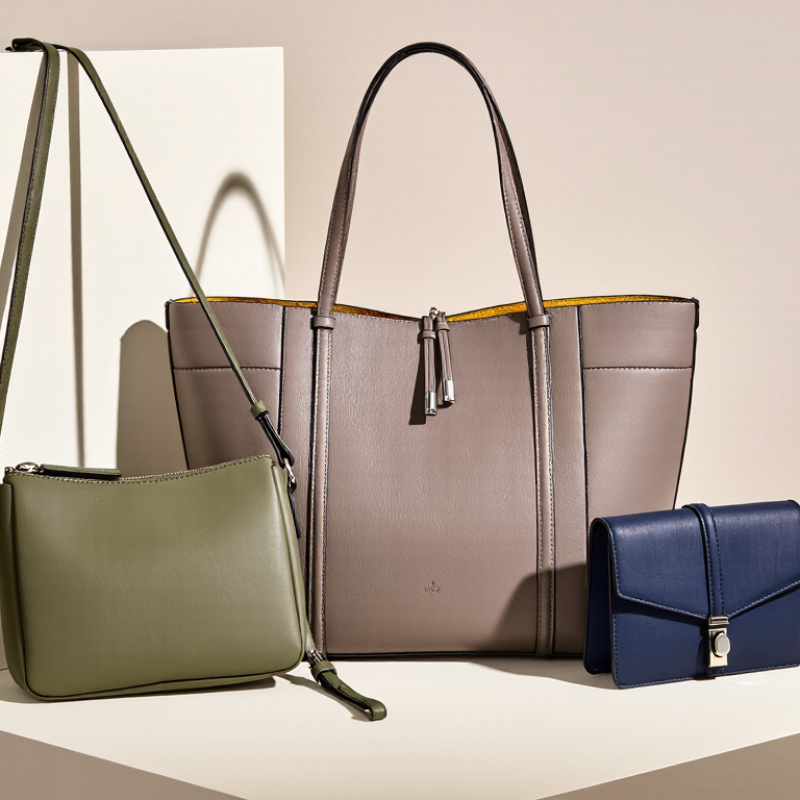
In 2026, a handbag collection must do more than display polished silhouettes on a showroom table. Global buyers examine proportion, purpose, material quality, and the story behind every detail. They want a bag that feels relevant in Tokyo, practical in Berlin, and visually distinct in New York. This raises a sharper question: what makes a handbag collection attractive to global buyers? The answer begins with disciplined design, not decoration alone. A structured work tote, a light crossbody, and a compact evening bag should serve different daily moments. Small details matter. Think smooth zippers, balanced handles, reinforced corners, and lining that does not feel disposable.

Professional buyers also look for dependable production and clear product information. They need accurate dimensions, tested hardware, consistent color references, and realistic delivery planning. Responsible sourcing strengthens trust when brands can explain material origins and factory standards without vague claims. Leather alternatives may attract attention, yet their durability and environmental impact require honest evidence. A collection should respect regional preferences while avoiding copied cultural symbols. That balance is difficult.

Experience from retail floors shows that attractive products must survive touch, movement, and repeated use. A beautiful sample can fail when its strap slips or its opening feels awkward. Buyers notice these weaknesses quickly. They also notice whether a brand listens and improves. For 2026, commercial appeal will come from useful innovation, credible craftsmanship, and a coherent visual language. Not every trend will work. That is acceptable. Thoughtful testing, transparent communication, and measured refinement can turn a promising collection into a trusted global proposition.
What Makes a 2026 Handbag Collection Attract Global Buyers?

Market Signals Shaping the 2026 Handbag Collection

What Makes a 2026 Handbag Collection Attract Global Buyers?

Market Signals Shaping the 2026 Handbag Collection

Global buyers are watching practical signals, not only seasonal colors. In recent showroom reviews, buyers repeatedly examined weight, strap adjustment, pocket access, and stitching consistency. A structured bag must still feel comfortable during airport transfers and long city walks. Lightweight construction is becoming a commercial advantage.

Proof matters. Buyers increasingly ask where materials come from and how suppliers manage production waste. Clear fiber content, repair guidance, and traceable manufacturing records can build stronger trust. Vague sustainability claims may now weaken a collection, especially when purchasing teams compare several suppliers. Reliable documentation often sells better than attractive wording.

Digital shopping is also changing product expectations. Buyers want sharp interior images, accurate dimensions, and short videos showing how the bag opens. A 2026 collection should support different lifestyles, including work travel, compact daily use, and evening events. Neutral shades remain useful, but controlled color accents can improve online visibility. Details travel.

Price pressure cannot be ignored. Many buyers are looking for durable materials and flexible designs at a rational cost. This may challenge collections built around complex decoration or fragile hardware. My own assumption that statement pieces always attract attention now feels incomplete. Some designs appear exciting in a showroom but perform poorly when buyers assess storage, weight, and repeat use. That assumption may fail.

What Makes a 2026 Handbag Collection Attract Global Buyers?

Market signals shaping product direction, pricing, and material choices

The index highlights two real market signals relevant to 2026 handbag planning. The global secondhand apparel market is projected to grow strongly, increasing demand for durability, repairability, resale value, and traceable materials. At the same time, the personal luxury goods market has shown a slight contraction, suggesting that buyers may prioritize versatile designs, craftsmanship, and clearly justified prices over excessive novelty.

Index base: 2023 = 100. Public market figures used: global secondhand apparel market of approximately US$197 billion in 2023 and US$350 billion projected for 2028; personal luxury goods market of approximately €363 billion in 2023 and €358 billion in 2024.

Design Features That Appeal to International Buyers

What Makes a 2026 Handbag Collection Attract Global Buyers?
Design Features That Appeal to International Buyers
A strong 2026 handbag collection must work across climates, routines, and personal styles. International buyers often look for lightweight structures, adjustable straps, and practical interior layouts. A bag should hold a phone, passport, compact wallet, and small water bottle without losing its shape. Secure zippers and reinforced handles also create confidence during daily travel. Small details matter.
Color choices need cultural awareness. Soft neutrals can suit many markets, while controlled seasonal shades add personality. Designers should test colors under natural and retail lighting. A pale lining may photograph beautifully, but it can show stains quickly. That weakness deserves honest review.
Material performance is equally important. Buyers increasingly ask about durability, care instructions, and sourcing information. Clear product details support reliable purchasing decisions. Quality teams can test stitching, strap tension, edge paint, and hardware before production. These checks reflect professional experience, not empty claims. Digital measurement charts can also reduce confusion between regional sizing expectations.
Comfort should guide the final design. A wide shoulder strap may feel better than a narrow decorative one. Some shoppers prefer structured bags, while others need flexible, foldable options. No design satisfies everyone. That is the difficult part. Collections should offer useful variety without becoming visually inconsistent. International feedback can reveal overlooked problems, such as handles that feel uncomfortable after extended carrying.

Materials, Craftsmanship, and Sustainability Standards

For 2026, global buyers will inspect a handbag beyond its silhouette.

Materials must show clear origin, stable quality, and measurable environmental performance. Recycled nylon, responsibly sourced leather, and plant-based coatings can attract attention. However, material labels alone prove very little. A sustainable claim needs supporting records.

A sustainable claim needs supporting records.
Craftsmanship

Craftsmanship remains visible in small details. Even edge paint should stay smooth after repeated bending. Stitch density should remain consistent around handles and corners.

Strong lining, reliable hardware, and replaceable parts can extend daily use. That matters more than a temporary visual trend. In supplier reviews, buyers should request material certificates, batch records, and durability test results. They should also examine water use, chemical controls, packaging, and worker safety practices.

Traceability

Traceability is becoming a practical purchasing standard.

Digital records can connect a finished bag with its fabric, hardware, and production site. Independent audits add credibility, but they are not perfect. A factory may pass one inspection and still need improvement later. That uncomfortable point deserves attention.

Sustainability should be measured repeatedly, not announced once. Buyers may also ask whether the product can be repaired locally, since shipping damaged items across continents increases its footprint.

A polished sample can impress. Long-term evidence is harder, and more valuable.

Pricing, Production, and Global Distribution Considerations

What Makes a 2026 Handbag Collection Attract Global Buyers?

Pricing, Production, and Global Distribution Considerations

A 2026 handbag collection needs a clear price ladder, not random price points. Bain & Company and Altagamma valued the broader luxury market at about €1.5 trillion in 2023. Yet buyers remain cautious. Each price should reflect material yield, skilled labor, packaging, duties, and currency movement. A beautiful bag can still fail when its landed cost feels unreasonable. I would not pretend every forecast is precise. Exchange rates can quickly weaken a carefully planned margin.

Production decisions also shape trust. Small initial batches can reduce unsold inventory and reveal real customer preferences. However, low volumes may increase unit costs and create inconsistent delivery times. The State of Fashion 2025 by McKinsey and The Business of Fashion describes slower, more selective luxury growth. That makes reliable quality more valuable than excessive variety. Factories should document inspection points, hardware testing, repair planning, and material traceability. Details matter.

Global distribution requires local evidence, not assumptions. DHL’s 2024 E-Commerce Trends Report found that 59% of shoppers purchase from retailers in other countries. They still expect transparent shipping, clear taxes, simple returns, and accurate product dimensions. Regional inventory can shorten delivery times, but it also ties up cash. A practical collection may use fewer core shapes, several material options, and flexible replenishment. It is less glamorous on paper. It may work better in reality.

What Makes a 2026 Handbag Collection Attract Global Buyers? — Pricing, Production, and Global Distribution Considerations
Decision Dimension Verified Data Point or Planning Benchmark Why Global Buyers Care 2026 Collection Implication
Target Retail Positioning Recommended planning architecture: 3 price tiers — entry, core, and premium — with approximately 20%, 60%, and 20% of the assortment respectively. A tiered range allows distributors and department stores to serve different customer budgets without creating an excessively complex product line. Build a clear “good–better–best” structure and maintain recognizable design details across all tiers.
Wholesale Pricing A practical planning formula is: wholesale price = total landed cost ÷ target gross-margin cost ratio. At a 55% gross margin target, the cost ratio is 45%. Buyers evaluate margin after freight, duties, warehousing, payment costs, and markdown risk rather than factory price alone. For a landed cost of US$45, a 55% gross-margin target produces an indicative wholesale price of US$100 before local taxes.
Landed-Cost Control A complete landed-cost model should include product cost, export packing, inland transport, international freight, insurance, import duty, customs fees, and destination delivery. Two suppliers with the same factory quotation can produce very different final costs when shipping terms, duty classification, and destination charges differ. Present quotations using a clearly stated Incoterms® 2020 rule and show which costs are included or excluded.
Material Compliance REACH restrictions apply to chemical substances placed on the European Union market; restricted substances can include certain dyes, coatings, heavy metals, and plasticizers. Importers increasingly require material declarations and laboratory evidence before approving production. Maintain a material bill of substances, supplier declarations, and test reports for leather, synthetic coatings, adhesives, linings, and metal hardware.
Product Safety The European Union General Product Safety Regulation has applied since 13 December 2024 to consumer products within its scope, including relevant traceability and safety obligations. Global buyers need reliable product identification, responsible-party information, and documented risk controls. Use permanent or durable product identifiers and retain technical files, inspection records, and corrective-action procedures.
Production Lead Time A realistic planning cycle for a new handbag style is commonly 16–28 weeks: design and sampling, testing, materials, production, inspection, and transport. Retail calendars are booked months in advance, while late delivery can cause missed launches, airfreight expenses, or cancelled orders. Freeze core materials early, approve a pre-production sample, and reserve transport capacity before the selling season begins.
Minimum Order Quantity A flexible launch program can target 300–800 units per color and style, while repeat programs may use higher quantities after sell-through is proven. Lower initial commitments reduce inventory exposure for buyers testing a new collection or market. Offer shared materials, limited colorways, and modular hardware to reduce factory setup and purchasing risk.
Quality Acceptance For a single-lot inspection using a commonly applied general-inspection approach, an AQL plan may use a 2.5% major-defect and 4.0% minor-defect acceptance level; the exact sample size depends on lot size and inspection level. Consistent inspection language helps buyers compare suppliers and reduces disputes over appearance, stitching, hardware, and function. Define major and minor defects with photographs, measurable tolerances, and a pre-shipment inspection procedure.
Carton Utilization International air-freight chargeable weight is generally based on the greater of actual weight or volumetric weight. A widely used volumetric formula is length × width × height in centimeters ÷ 6,000. Bulky packaging can raise freight charges even when the handbags themselves are lightweight. Use stackable cartons, protect handles without oversized void fill, and calculate volumetric weight before confirming the shipping method.
Sea-Freight Planning A standard 20-foot dry container has an internal volume of roughly 33 cubic meters, while a 40-foot dry container has roughly 67 cubic meters; usable capacity varies with carton dimensions and loading rules. Container utilization affects freight cost per unit and helps buyers decide between consolidated shipments and full-container shipments. Standardize carton dimensions and provide a carton-packing list showing units, gross weight, net weight, and cubic volume.
Delivery Reliability A buyer-friendly service target is at least 95% on-time delivery against the confirmed ex-factory date, measured by purchase order or shipment. Reliable delivery is often more valuable than a small unit-price reduction because retail launch windows are time-sensitive. Track order confirmation, material readiness, production completion, inspection release, booking, and destination arrival as separate milestones.
Returns and Defect Reserve A prudent financial model can reserve 2–5% of projected sales value for returns, warranty claims, repairs, packaging damage, and commercial allowances; the actual rate should be based on historical data. Cross-border returns and repairs can materially reduce the expected margin of a collection. Use reinforced stress points, replaceable hardware where possible, spare-part planning, and a documented after-sales process.
Sustainable Material Evidence Material claims should be supported by chain-of-custody documents, transaction certificates, recycled-content evidence, or laboratory testing rather than marketing language alone. Distributors need credible evidence for product pages, customs files, retailer compliance reviews, and consumer-facing claims. Record supplier, material composition, production batch, certificate number, and claim wording for every approved material.
Exotic Animal Materials CITES-listed species and products made from them may require permits or certificates for international trade; requirements depend on the species, source, and countries involved. Missing documentation can result in shipment delays, seizure, or refusal by the destination market. Use non-CITES materials for broad distribution unless a complete permit, sourcing, and customs process has been confirmed in advance.
Distribution Coverage A scalable launch structure can combine one regional warehouse or logistics hub per major trade zone with a small number of consolidated replenishment shipments. Regional inventory reduces delivery distance and improves replenishment speed while avoiding the complexity of shipping every order individually from the factory. Prepare region-specific carton labels, commercial invoices, packing lists, harmonized tariff classifications, and destination compliance files.
Method note: Cost formulas, compliance requirements, volumetric-weight rules, container capacities, inspection terminology, and CITES obligations are established industry or regulatory reference points. Lead-time, MOQ, margin, delivery, and reserve percentages are planning benchmarks rather than universal market averages and should be validated with the selected supplier, carrier, customs broker, and destination-market regulations.

Brand Communication and Cross-Border Consumer Trust

What Makes a 2026 Handbag Collection Attract Global Buyers?

In 2026, international buyers judge communication before design details. A clear product page reduces doubt. It should show exact dimensions, weight, materials, lining, and care instructions. Real photographs help customers imagine the bag beside a laptop or travel coat. Transparent delivery estimates also matter. Buyers want to understand duties, return conditions, and customer support before payment. These details demonstrate professional preparation, not merely attractive storytelling.

Tips: Use natural translations, not rigid machine wording. Display measurements in centimetres and inches. Add close-up images of stitching, zippers, and hardware. Explain how customer reviews are verified. A visible support email and response time can strengthen confidence. Small details travel well.

Cross-border trust grows through consistent messages across websites, packaging, and social channels. A promised delivery window should match the final tracking update. If a material changes, explain why and update every relevant page. Silence creates suspicion quickly.

In my experience, buyers forgive delays more easily when communication is early, specific, and respectful. Still, no system is flawless. Some translated phrases may sound polite but feel distant. Testing copy with local readers can reveal this weakness. Reliable communication is not perfect communication; it is accountable communication.

FAQS

What practical features do global buyers examine in a 2026 handbag collection?

They check weight, strap adjustment, pocket access, and stitching consistency. A structured bag should remain comfortable during airport transfers and long walks.

Why is lightweight construction becoming commercially important?

Buyers often carry bags for hours. Lower weight improves comfort during commutes, flights, and city travel. Comfort may sell better than decoration.

What material information should a product page provide?

It should list fiber content, lining, care instructions, and manufacturing details. Clear records can build trust. Vague claims may create doubt.

How can online images improve handbag purchasing decisions?

Show accurate dimensions, interior storage, stitching, zippers, and hardware. Add a short video showing how the bag opens. Details travel online.

Which handbag designs suit different daily lifestyles?

Collections should include work-travel bags, compact daily styles, and evening options. A laptop compartment or quick-access pocket adds useful value.

How should color choices support online visibility?

Neutral shades remain practical for daily use. Controlled color accents can attract attention on digital pages. Too much color may reduce versatility.

What information strengthens cross-border customer trust?

Show delivery estimates, duties, return conditions, and customer support details. A visible support email helps. The message should match tracking updates.

How can communication remain reliable when materials or deliveries change?

Explain changes early and update every relevant page. Use natural translations and test wording with local readers. No system is perfect. Mistakes can still happen.

Conclusion

The 2026 handbag market will be shaped by changing consumer priorities, practical lifestyles, regional preferences, and growing demand for products that combine style with everyday function. What makes a handbag collection attractive to global buyers is its ability to offer versatile designs, thoughtful proportions, adaptable colors, and details that suit different cultural tastes without losing a clear identity. Collections with useful compartments, comfortable construction, and season-to-season relevance are likely to gain broader international interest.

Materials, craftsmanship, and sustainability will also influence purchasing decisions. Durable fabrics, responsible sourcing, transparent production practices, and consistent quality can strengthen buyer confidence. At the same time, competitive pricing, reliable production capacity, efficient international distribution, and flexible inventory planning are essential for commercial success. Clear brand communication, accurate product information, responsive service, and culturally aware marketing can further build cross-border consumer trust. Together, these factors help a 2026 handbag collection achieve both creative appeal and long-term global market potential.

Sienna

Sienna

Sienna is a skilled marketing professional with a deep expertise in our company’s core products and services. With a passion for innovation and detail, she plays a pivotal role in crafting insightful blog posts that not only highlight the unique features of our offerings but also provide valuable......